
RUNEBond in THORChain: Security and RUNE Bonding
RUNE bonding is a core part of the security model in THORChain. By bonding RUNE, node operators secure the network, enable cross-chain liquidity, and earn protocol-level rewards. Understanding how RUNE bonding works is essential for anyone who wants to understand how THORChain operates under the hood.
This article explains:
- what THORChain is and how it works
- why RUNE sits at the center of the protocol
- what RUNE bonding means in practice
- and how RUNEBond makes node bonding accessible without running infrastructure.
What is THORChain?
THORChain is a cross-chain liquidity protocol that allows users to swap native assets across different blockchains without wrapping or bridging.
That means you can swap:
- BTC → ETH
- ETH → RUNE
- RUNE → ATOM
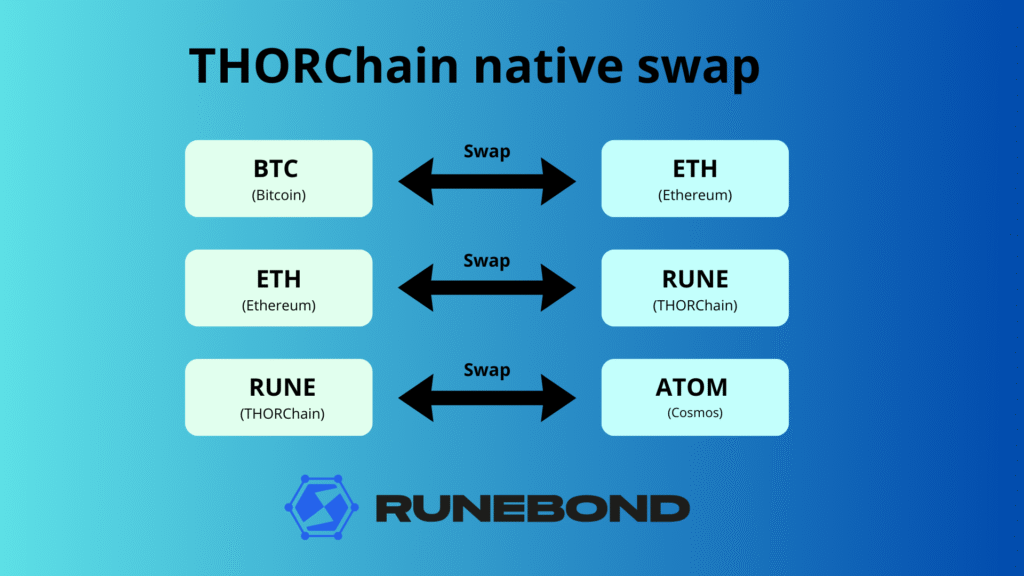
All swaps use native assets, not wrapped tokens or IOUs. THORChain works as a decentralized liquidity layer between blockchains.
Why RUNE Is at the Center of THORChain
RUNE is the native asset of THORChain and plays a critical role in the system:
- Every liquidity pool is paired with RUNE (e.g. BTC–RUNE, ETH–RUNE).
- RUNE is used for settlement between chains.
- RUNE aligns incentives between liquidity providers, node operators, and users.
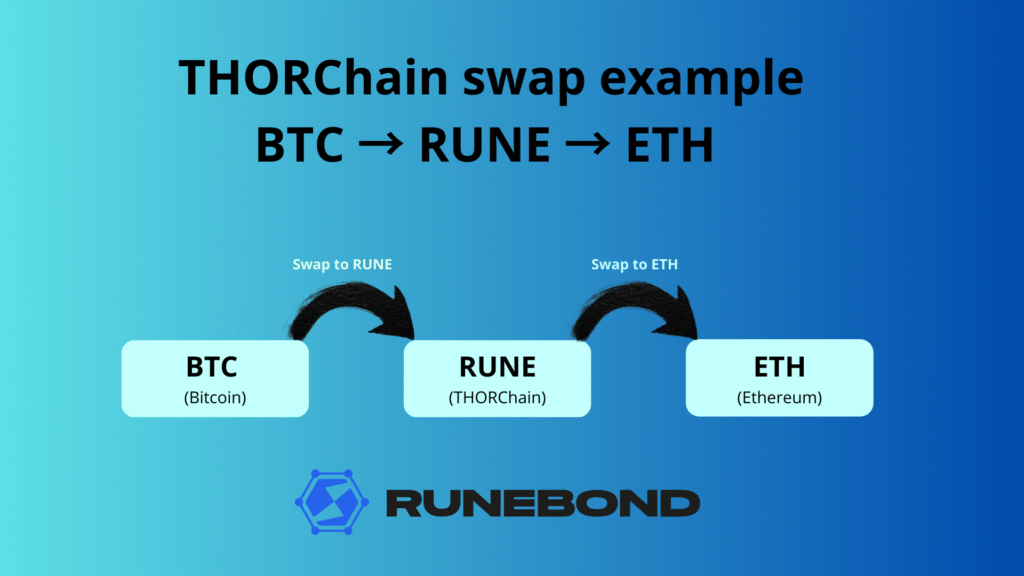
In simple terms: no RUNE, no THORChain.
How THORChain Works Under the Hood
THORChain is powered by a decentralized set of node operators who run the network.
These nodes:
- Manage vaults that hold pooled assets.
- Observe inbound transactions on supported chains.
- Sign and execute outbound transactions.
- Reach consensus using a Tendermint-based system.
To ensure security, nodes are required to bond RUNE as collateral.
What Does RUNE Bonding Mean in THORChain?
RUNE bonding means a node operator locks RUNE to participate in securing the network.
This creates strong economic guarantees:
- honest nodes earn rewards
- malicious or faulty nodes can be slashed
As more value flows through THORChain, more RUNE bonding is required creating a powerful security feedback loop.
How do THORChain nodes earn revenue?
Node operators earn revenue from multiple sources:
- Swap fees – every swap on THORChain generates fees paid by users.
- Liquidity fees & rewards – fees are distributed between liquidity providers and node operators.
Why RUNE Bonding Matters for THORChain Users
- Secures the network.
- Enables deep liquidity.
- Aligns long-term incentives.
Historically, bonding RUNE required running a full node a complex and capital-intensive process
This is where RUNEBond comes in.

What is RUNEBond?
RUNEBond allows users to gain exposure to node bonding rewards without running infrastructure themselves.
Instead of operating a node, users can:
- Bond RUNE through RUNEBond.
- Participate in node-level economics.
- Earn yield derived from real protocol usage.
This lowers the barrier to entry and makes THORChain’s security model accessible to more participants.
RUNEBond isn’t just another yield product it’s a way to participate in THORChain’s core security and revenue engine by making node economics accessible to a broader audience. Before chasing yield, it’s worth understanding where that yield comes from. With this context, participants can explore bonding RUNE through RUNEBond.
Website – https://runebond.com/
X – https://x.com/RUNEBondApp
Telegram – https://t.me/RUNEBondApp