RUNE bonding with RUNEBond: Compound Yield Calculator & 10-Year Projections
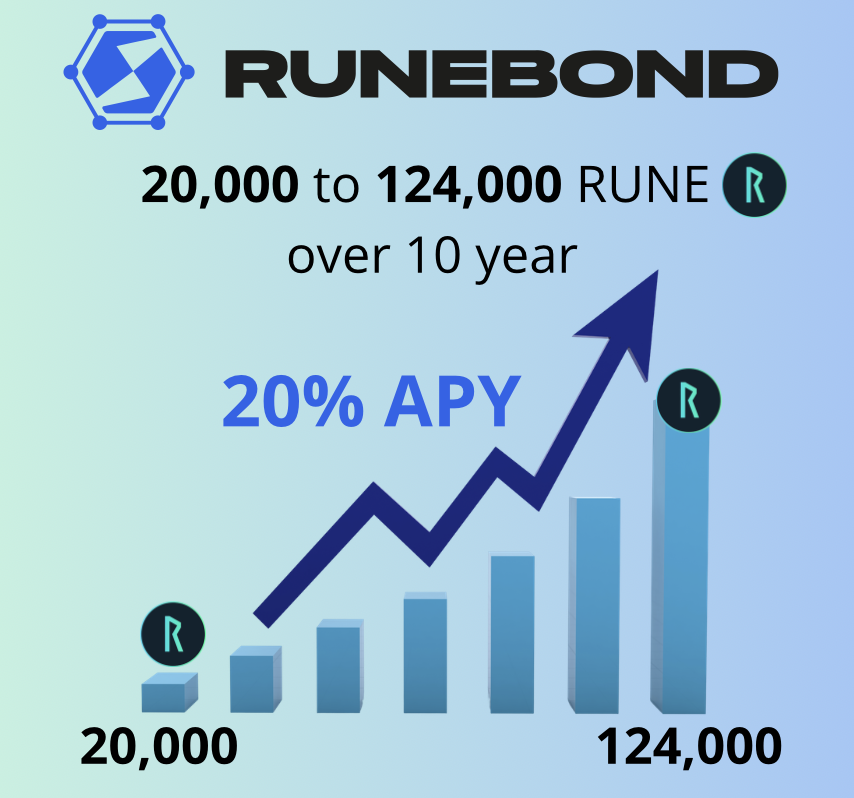
RUNE bonding with RUNEBond generates real, protocol-level yield at ~20% APY. This comprehensive RUNE bonding guide shows you exactly how compound interest transforms modest investments into serious wealth.
What You’ll Learn
In this RUNE bonding guide, we cover:
- What RUNE bonding is and how it works
- Real yield numbers (currently ~20% APY)
- How to use the RUNEBond calculator
- 5-year and 10-year compound projections
- Benefits, risks, and how to get started
What Is RUNE Bonding?
RUNE bonding is the process of delegating your RUNE tokens to THORChain node operators. In return, you earn a share of protocol rewards – currently around 20% APY.
Unlike staking on other platforms, RUNE bonding rewards come from real protocol activity:
- Swap fees from THORChain trades
- Liquidity fees paid by users
- Protocol-level block rewards
✅ This is real yield – not inflationary token emissions.
How Compound Yield Multiplies Your RUNE
Compound yield means your earnings generate more earnings.
When you start RUNE bonding:
- You earn rewards on your initial investment
- Those rewards get reinvested automatically
- You earn rewards on your rewards
This creates exponential growth. The longer you stay bonded, the faster your capital multiplies.
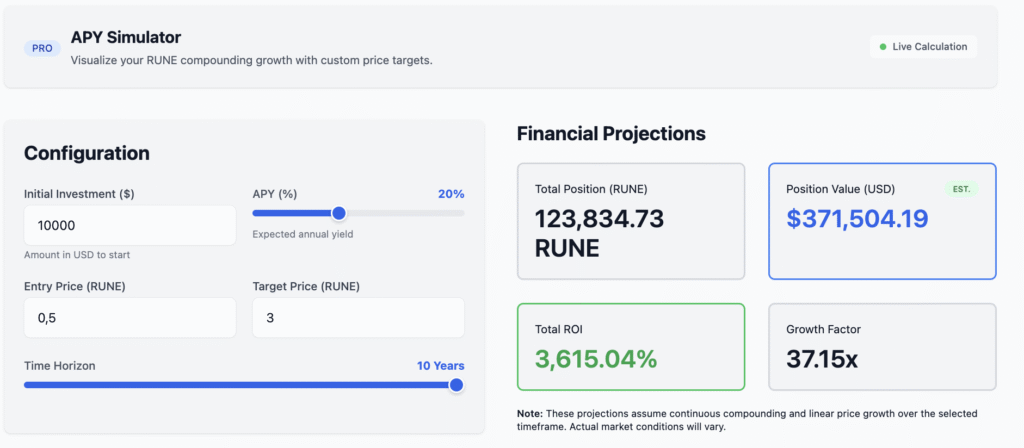
Compound Yield Calculator & Projections
The RUNEBond calculator visualizes the power of compound RUNE bonding. Input your investment and watch the projections.
➡️ Try it at https://app.runebond.com/custom
Table showing RUNE bonding growth from 20,000 to 124,000 RUNE over 10 years*
Not financial or investment advice. Figures are illustrative. Past performance does not guarantee future results.
Example: $10,000 RUNE Bonding Investment
Starting with $10,000 at RUNE = $0.50 → 20,000 RUNE
| Timeframe | 10% APY | 15% APY | 20% APY |
|---|---|---|---|
| 5 years | ~32,211 RUNE | ~40,226 RUNE | ~49,766 RUNE |
| 10 years | ~51,874 RUNE | ~80,910 RUNE | ~124,000 RUNE |
Your 20,000 RUNE could grow to 52,000–124,000 RUNE through RUNE bonding, depending on APY.
RUNE Bonding + Price Appreciation
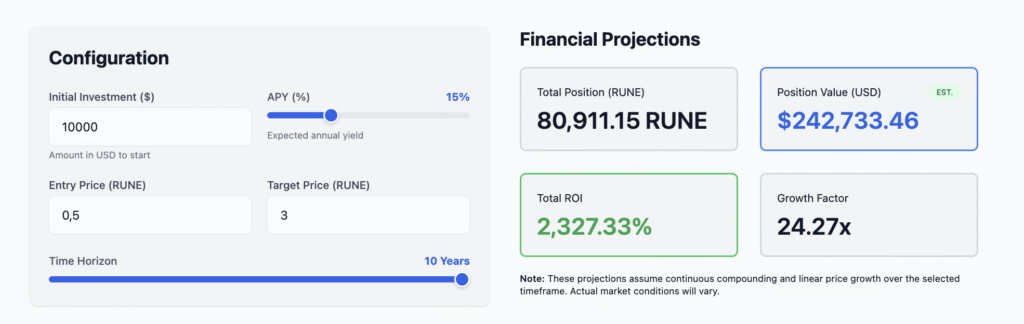
| Scenario | RUNE Holdings (10y @ 15% APY) | RUNE Price | USD Value |
|---|---|---|---|
| Moderate | 80,910 RUNE | $1 | $80,910 |
| Strong | 80,910 RUNE | $3 | $242,730 |
Your $10,000 RUNE bonding investment could grow 8-24x in USD terms.
Why Start RUNE Bonding Early?
Time is the most powerful variable in compound RUNE bonding:
| APY | Doubling Time |
|---|---|
| 15% | ~5 years |
| 20% | ~3.5 years |
⏱ Delaying RUNE bonding even one year significantly reduces long-term returns.
How RUNEBond Makes RUNE Bonding Simple
RUNEBond removes technical barriers from RUNE bonding:
- Delegate – Choose a node operator and bond your RUNE
- Earn – Receive rewards from protocol activity
- Compound – Reinvest automatically or claim manually
No node operation required. Just passive RUNE bonding income.
RUNE Bonding Benefits
| Benefit | Description |
|---|---|
| Non-custodial | Full control of your RUNE during bonding |
| Passive income | RUNE bonding rewards accumulate automatically |
| Scalable | Works for any RUNE bonding position size |
| Real yield | Based on protocol revenue, not inflation |
Risks to Consider Before Bonding
Every RUNE bonding investment carries risk:
- Lock-up period – Bonded RUNE isn’t instantly withdrawable
- Market volatility – Price swings can offset RUNE bonding gains
- APY fluctuation – RUNE bonding yields vary with network activity
✅ Diversify across multiple node operators for safer RUNE bonding and more sustainable compounding.
Summary – RUNE Bonding with RUNEBond
Compound yield is a powerful wealth creation tool, and RUNEBond makes it accessible without running a node.
Key takeaways:
- Current APY ~20%, conservative projections 10–15%
- 20,000 RUNE → 52,000–81,000 RUNE in 10 years (10–15% APY)
- At 20% APY → 20,000 RUNE becomes ~124,000 RUNE in 10 years
- Early entry and consistent reinvestment maximize returns
- Use the RUNEBond calculator to model your own scenarios
Let the numbers speak for themselves.